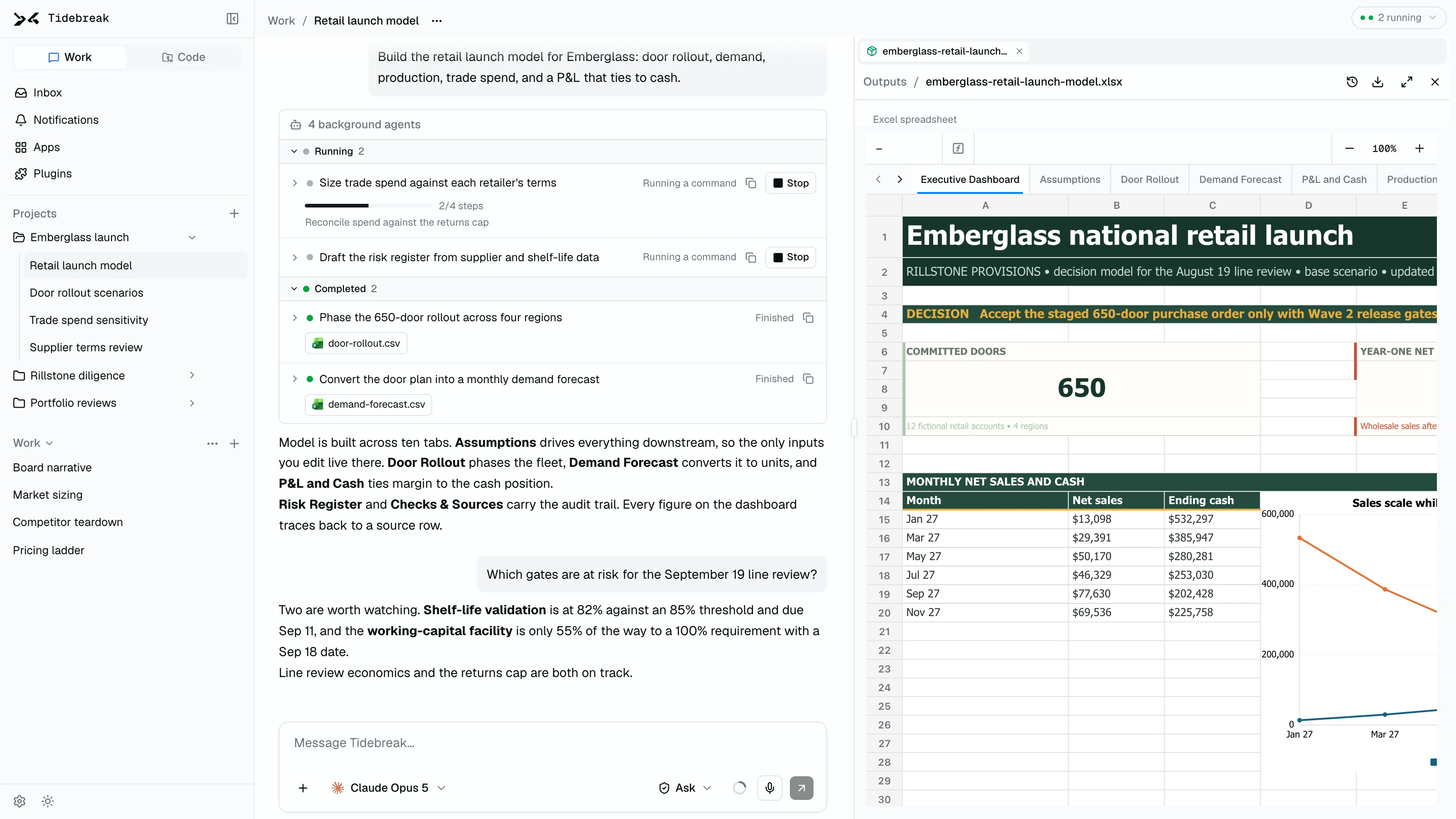
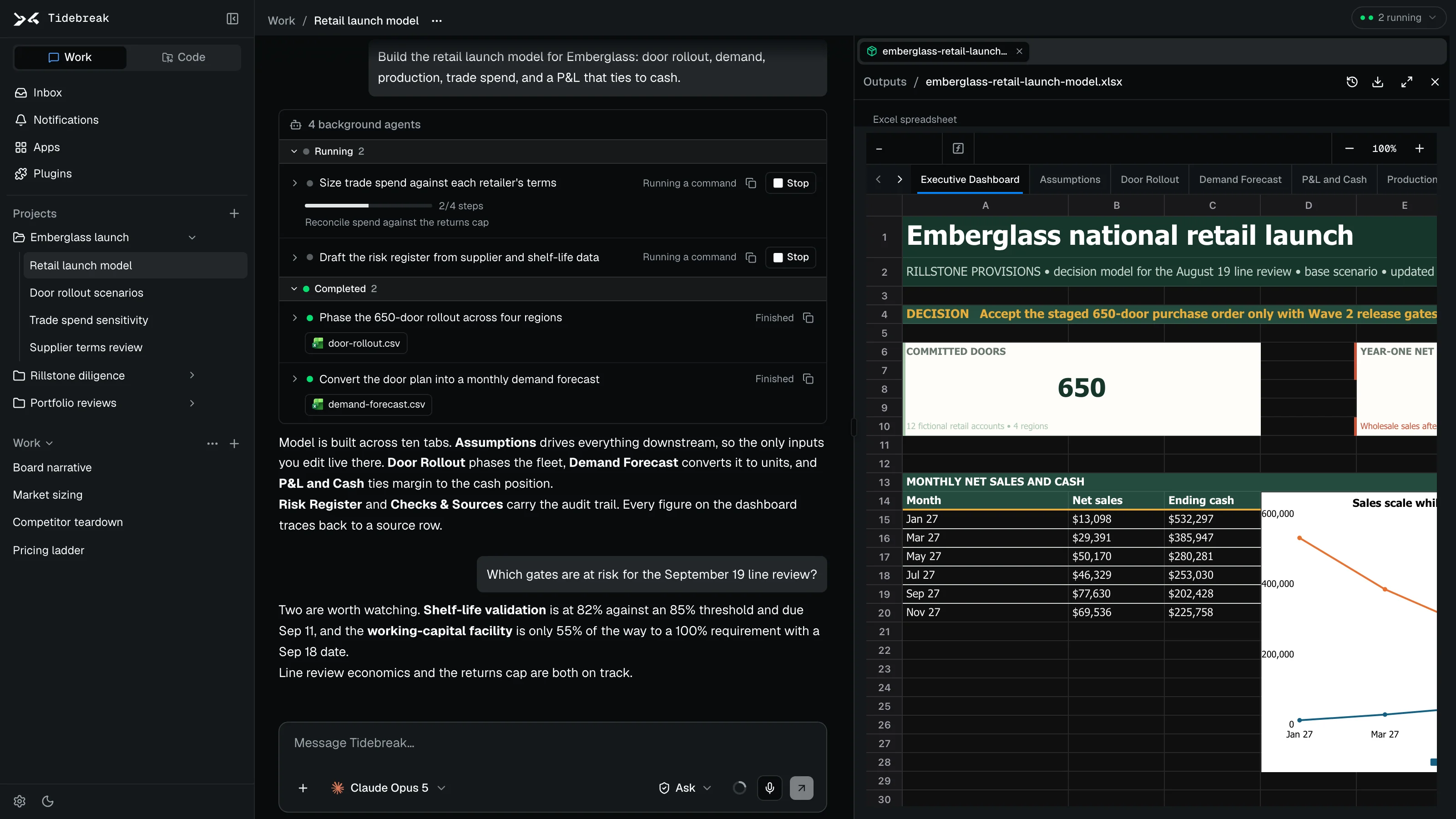
The research engine for serious work. Now open source.
Proven on three years of private equity diligence and rebuilt in Rust. Grant a folder, pick a model, and walk away with a spreadsheet, deck, or memo you can put your name on.
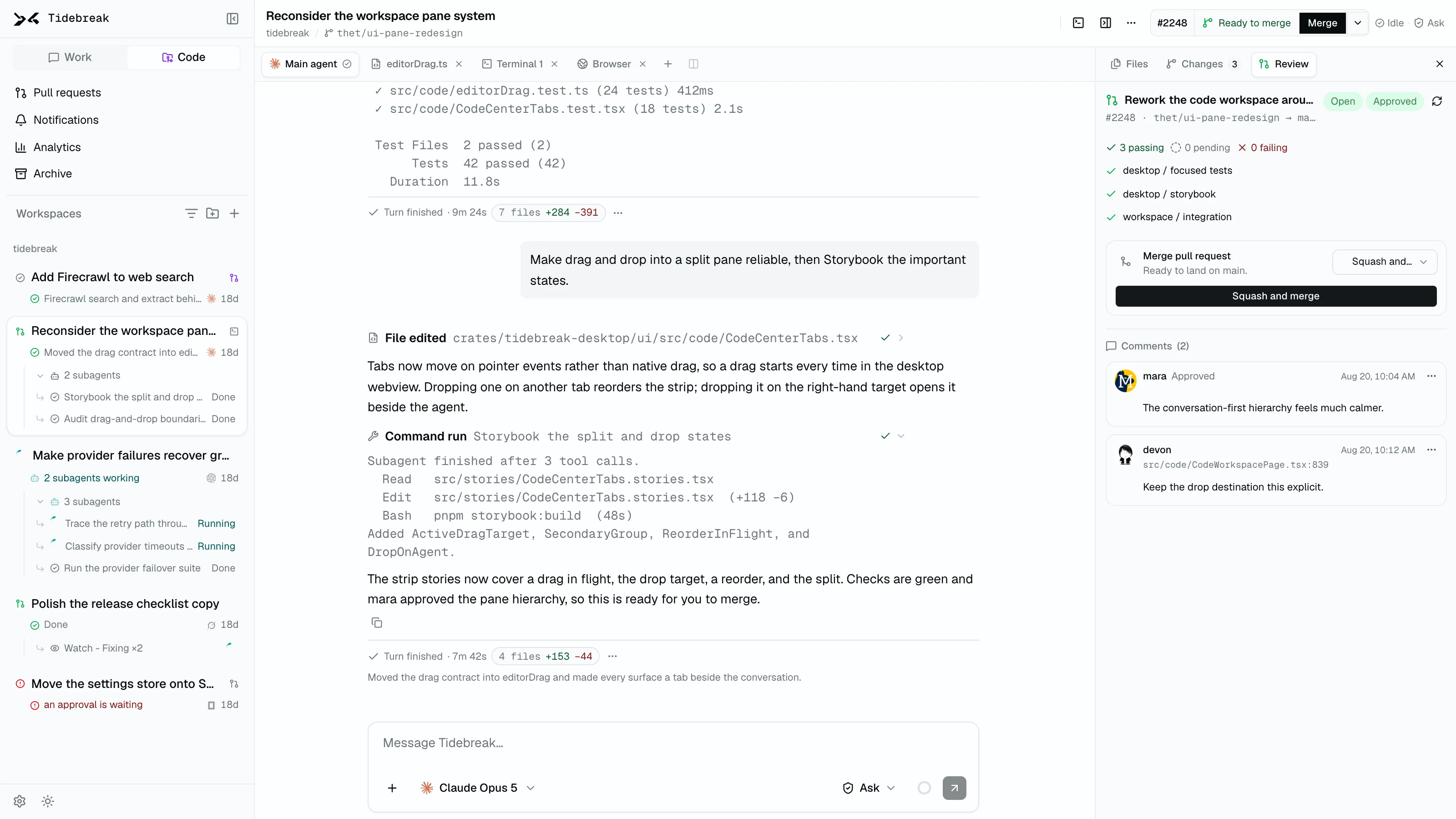
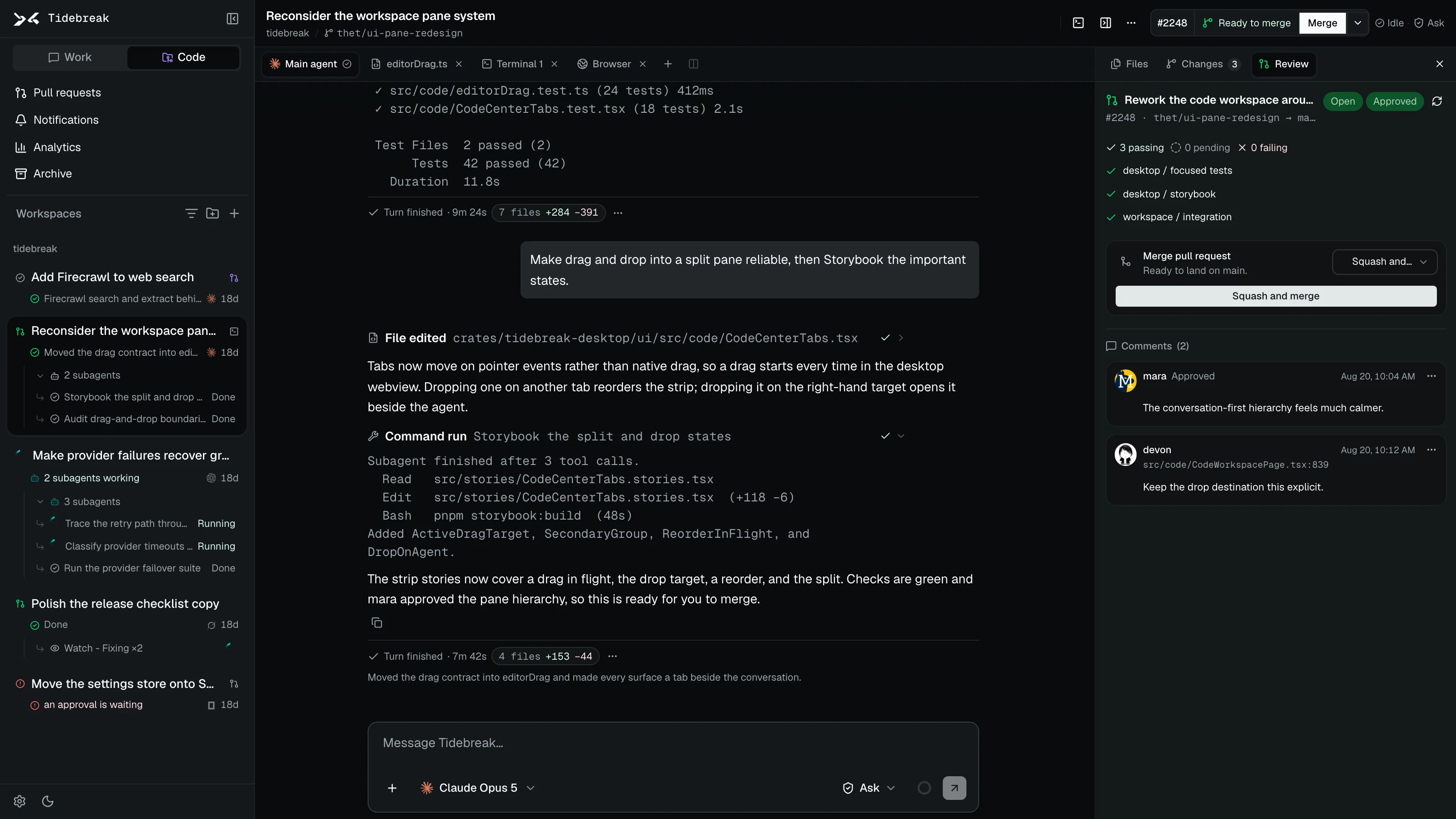
The control room for 100x engineers. Now open source.
Run Claude Code, Codex CLI, opencode, and Grok side by side, each in its own worktree, on whatever model you point at it. One engineer, a fleet of agents, every diff reviewed.
Documents, decks, and spreadsheets built from your own files, versioned on your machine.
Code
Drive a fleet of coding agents across any model and any harness, each in its own worktree.
Your tools. Your choice.
subscription
Your ChatGPT plan
Sign in with ChatGPT. The OAuth handshake runs on your own machine, and you use the subscription you already pay for. No API key to create.
api-key
One API key
Anthropic, OpenAI, Google, xAI, Fireworks, Together, or OpenRouter. The key goes in the OS credential store, not in a config file you might commit.
local
No cloud at all
Point the OpenAI-compatible slot at Ollama and run open-weight models on your own hardware, so even prompts stay on the machine.
Claude
GPT
Gemini
Grok
Llama
Mistral
Qwen
DeepSeek
GLM
Gemma
Kimi
Claude
GPT
Gemini
Grok
Llama
Mistral
Qwen
DeepSeek
GLM
Gemma
Kimi
Every layer is swappable.
Work mode and code mode ride the same engine. Swap any layer under either one.
Models
Start on the ChatGPT plan you already pay for.
ChatGPT subscription
API key
OpenRouter
Ollama
Anthropic, OpenAI, Gemini, xAI, Fireworks, Together, OpenRouter, or a local Ollama model. Switch mid-chat. Cheap model for the grind, strong model for the hard step. In code mode each engine keeps its own sign-in, and you set the model, reasoning effort, and fast mode from the composer.
Execution
Same exec tool. Different backends.
Native macOS sandbox
Local Docker
E2B
Daytona
Hosted machine
The native sandbox is the macOS default. On Windows and Linux, pick Docker, E2B, or Daytona. Per-chat network policy: offline, package installs, custom hosts, or open. Credentials never enter the sandbox. A code workspace can also run on a Model Gateway machine that clones, commits, and pushes as you.
Host
A folder is available only after you pick it.
Native folder picker
List, read, write, run
Per-chat grant
No absolute paths
Grant each capability on its own. Disconnect a folder from one chat, or forget it everywhere. Overwriting a connected file always asks, in every permission mode. In code mode each workspace gets its own git worktree under a root you can see and move, so no agent touches your working copy.
Computer use (screen and app control) is partial, and macOS-only.
Search
Look things up without leaving the machine.
Provider built-in
Exa
Tavily
Brave
Firecrawl
SearXNG
Anthropic and OpenAI can search through the provider you already configured. Or bring Exa, Tavily, Brave, Firecrawl, or a SearXNG you host. On macOS the agent can drive an in-app browser with its own profile and hand it back when it needs you. MCP servers and REST APIs registered from an OpenAPI document reach the rest. A managed OAuth catalog is deliberately not the plan.
Output
Finished files and reviewed diffs.
Versioned files
In-app preview
Per-turn diffs
Pull requests
Watch and fix
A spreadsheet, a deck, a memo, a chart, a small app, or a pull request. Built-in skills cover Word, PDF, PowerPoint, spreadsheets, and charts. Code mode drives Claude Code, Codex CLI, opencode, and Grok CLI in isolated worktrees, opens the pull request, and keeps repairing it until the checks are green. Nothing reaches your branch until you have read the change.
Trust
The engine runs on your machine. The defaults stay boring on purpose.
Plan, Ask, Auto, Allow all
OS credential store
State in SQLite on disk
Merge is yours
The same four permission modes govern both surfaces, so a coding agent asks before it acts on the terms a document agent does. Every MCP tool asks. An agent can open, repair, and update a pull request, but the merge button only answers to you. Rust, because the loop is fast enough to feel like a native tool.
Features
What working in it looks like.
Switch models, grant only what a task needs, and read every result before you keep it, whether that is a finished file or a change on a branch.
Every deliverable keeps its history.
Preview any version. Restore one without deleting what came after.
EXECUTIVE BRIEF · V2
Launch-readiness brief
Viewing an earlier version
Version historyRestore v2
6
v6 · You
Restored from v2
CURRENT
2
v2 · Agent
23 min ago
VIEWING
1
v1 · You
31 min ago
Switch models mid-task.
One task. One journal. Any provider.
Research complete
OpenAI · 12 journal entries
switched by you
Drafting the final brief
Claude · context carried forward
ACTIVE
Folders are scoped to a chat.
Access starts when you grant it and ends here.
Q3 diligence
Connected folder
GRANTED
This chat
Read + write
New chats
No access
Host path
Hidden
Sensitive actions ask first.
Your files stay yours in every permission mode.
Replace board_deck.pptx?
You edited this file after the agent’s last version.
ASK
Allow onceDeny
Every turn arrives as a diff.
Read what the agent changed before any of it reaches your branch.
src/pages/index.astro+18−4
<section class="hero">
− <h1>The research engine</h1>
+ <h1>One engine. Two modes.</h1>
</section>
Review & commit3 files in this turn
Agents never share a checkout.
Each one works in its own git worktree, so parallel work never collides.
hero-labClaude CodeReady
fix/parserCodex CLIRunning
docs/apiGrok CLIReview
Hand it the pull request and walk away.
Watch and fix survives a restart, repairs each new failure, and stops when the PR is ready for you.
#2248 · hero-lab
Claude Code · watching since 9:14
Watching
focused tests failedFixed · 2 files
Conflicts with mainRebased
mara requested changesAddressed · 1 file
3 passing · approvedReady for you
Rules that fire on the pull request, not on a clock.
Checks failed, conflicts, changes requested, ready to merge. Each trigger fires once per commit.
Triggerstidebreak · all workspaces
Checks failedthenFix CI
Changes requestedthenAddress review
Behind mainthenUpdate branch
Ready to mergethenNotify me
The world we're building toward
The client should be the commodity.
Tidebreak is the open surface. The harder work is making every model, company app, and production system usable by agents without giving up control. That is the system we are building around it.
01
Models + apps
One governed front door for every model and connected app.
Bring Anthropic, OpenAI, Google, xAI, local models, and MCP-connected applications behind shared identity, grants, routing, usage, and spend controls. Tidebreak already signs in to it for hosted models and machines.
Model routing
Identity + grants
Usage + spend
MCP apps
02
Infrastructure
Let agents reach production without handing them the keys.
Give agents policy-bound access to Kubernetes, PostgreSQL, cloud CLIs, SSH, and SaaS through short-lived credentials, explicit approvals, and a durable audit trail.
Kubernetes
PostgreSQL
Cloud + SSH
Approvals + audit
03
Code
Take the agent all the way to a tested, shipped change.
Code mode already drives four engines in isolated worktrees, reviews every turn as a diff, watches a pull request until it is green, and merges it from the app. What is ahead: sessions you hand to a hosted machine from Slack or your phone, a scheduler, and tests an agent is trusted to act on.
Hosted machines
Slack + mobile
Scheduled runs
Trusted tests
Design partners
Help define the next generation of agentic AI.
We’re looking for teams to shape how agents work across models, software, and infrastructure.
For three years we built enterprise-grade research agents for some of the most high-fidelity work there is: private equity diligence, the kind of file someone stakes their career on.
Now we're shifting our focus to secure, compliant infrastructure for the agentic AI era. Tidebreak is the open client at the edge of that system.
Ship your first deliverable or PR in minutes.
macOS, Windows, and Linux. Your ChatGPT plan, a key, or Ollama. No Tidebreak account.